
You’re helping to stop oesophageal cancer before it starts
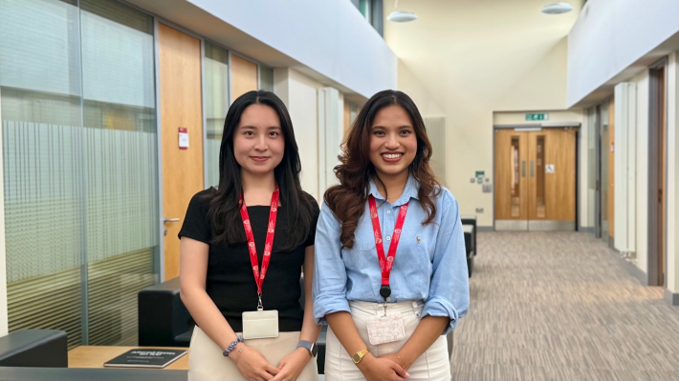
Every year, hundreds of people across the island of Ireland are diagnosed with oesophageal cancer. Too often, it’s found at a late stage, when treatment options are more limited. AllCaN Oesophageal is a Breakthrough Cancer Research funded ambitious all-island research programme. This first-of-its-kind programme launched in 2023, bringing together leading scientists, clinicians and patient representatives from across Ireland.
The goal? To improve outcomes for people at every stage of the disease – from prevention and early detection to diagnosis, treatment, and survivorship.
One of the programme’s most exciting areas of research is prevention. Researchers are studying Barrett’s oesophagus – a condition in where the lining of the oesophagus (food pipe) changes, usually after years of acid reflux or heartburn. Most people with Barrett’s oesophagus will never develop cancer. But it’s the main known precursor to oesophageal adenocarcinoma, the most common type of oesophageal cancer.
Can we identify which patients are most at risk? Can we find new ways to prevent Barrett’s oesophagus from progressing to cancer? By answering these questions, researchers hope to reduce the number of people who develop the disease. Already, the prevention research is producing valuable insights.
Do environmental factors, such as the quality of public drinking water, play a role in oesophageal cancer risk? Researchers found that higher exposure to nitrates in drinking water in Northern Ireland was linked to a modest increase in risk. Further research is needed before firm conclusions can be drawn. Understanding how our environment influences cancer risk could help shape public health strategies.
Another project, led by Dr. Carney, focuses on improving early detection of Barrett’s oesophagus through the use of the capsule sponge test. This simple test involves swallowing a small capsule attached to a thread, which expands into a sponge that gently collects cells from the oesophagus as it is removed. This test is much less invasive than endoscopy. Researchers in Queen’s have been exploring GPs’ views on introducing the test into primary care. Their findings could help promising innovations reach patients more quickly.
Other researchers, like Kelly Tang, are examining whether commonly prescribed medicines influence the risk of oesophageal cancer. Early findings suggest previous antibiotic use may be associated with an increased risk of oesophageal adenocarcinoma. Researchers are also investigating prescribing patterns among people with Barrett’s oesophagus to understand whether some medicines could influence cancer risk or outcomes.
Abigail Jeyaraj is exploring why oesophageal cancer appears to be occurring more frequently in younger adults. Early findings suggest obesity may have a stronger link with oesophageal adenocarcinoma in people under 50 than previously recognised. Researchers are also studying how younger patients are diagnosed, with the aim of identifying opportunities to detect the disease earlier.
Breakthrough Cancer Research is investing in prevention as well as detection, better treatments and survivorship. They want to create a future where fewer people face an oesophageal cancer diagnosis.

1. Environmental exposures and oesophageal cancer incidence on the island of Ireland: Identifying novel prevention opportunities – Rachel McMenemy under the supervision of Dr. Dan Middleton and Prof. Helen Coleman, Queen’s University Belfast.
2. Age inequalities in Barrett’s oesophagus and oesophageal adenocarcinoma risk, treatment and survival: a mixed-methods study – Abigail Jeyaraj under supervision of Dr. Ashleigh Russell, Clinical Lecturer and Consultant Oncologist, Queen’s University Belfast.
3. Exploring Barriers and Enablers to the Implementation of Novel Capsule Sponge Technology in Primary Care – Dr. Órla Carney under the supervision of Prof. Helen Reid, Professor of Primary Care and Medical Education, Queen’s University Belfast.
4. Pharmacoepidemiology research to determine modifiable risk factors associated with Barrett’s oesophagus and oesophageal adenocarcinoma risk – Kelly Tang under the supervision of Prof. Chris Cardwell, Dr. Blánaid Hicks, Queen’s University Belfast and Prof. Kathleen Bennett, Royal College of Surgeons in Ireland.